

{{item.Subject}}
Industry News
Learn about events, happenings and more
Would you have believed this Australian new-car sales chart 5 years ago?
Thursday, 08 October 2026 | James Coleman
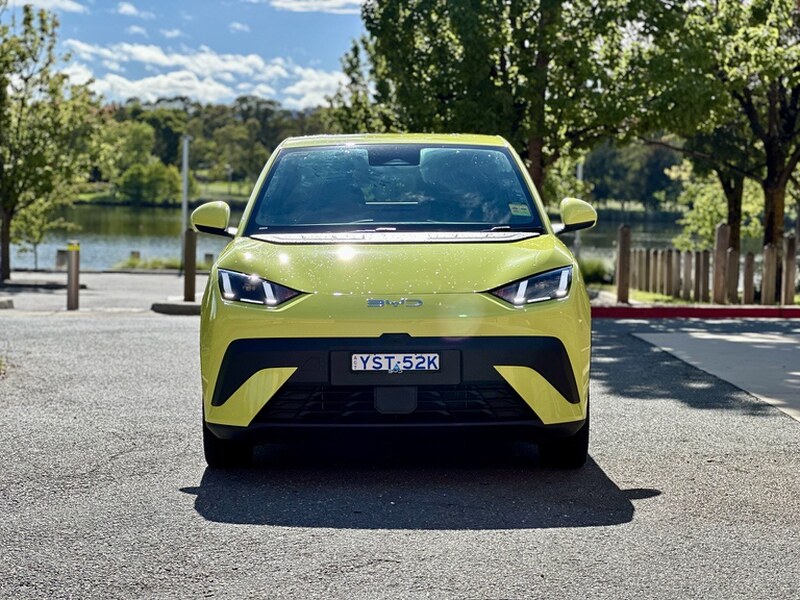
New vehicle sales data is out for September 2026 and if you happened to take a peek at it during a séance or palm-reading two, three, five years ago, you probably let out a shriek.
Mitsubishi, Nissan, Subaru, Volkswagen – all the mainstream, established brands – they're nowhere to be seen in the top 10.
Toyota is still comfortably Australia's best-selling brand, so no particular surprises there. But from there? BYD. Ahead of Ford, Kia and Mazda. Tesla is in sixth place, GWM seventh, MG ninth and Geely tenth.
So yes, the Chinese takeover is real. And happening impressively fast.
But should you get one? Because it might be cheap now, but how much will it be worth once the warranty's up?
Here are our takeaways from last month's figures, and what might happen when all these new EVs and Chinese cars start coming through the used-car market, based on the ones we've already sold.
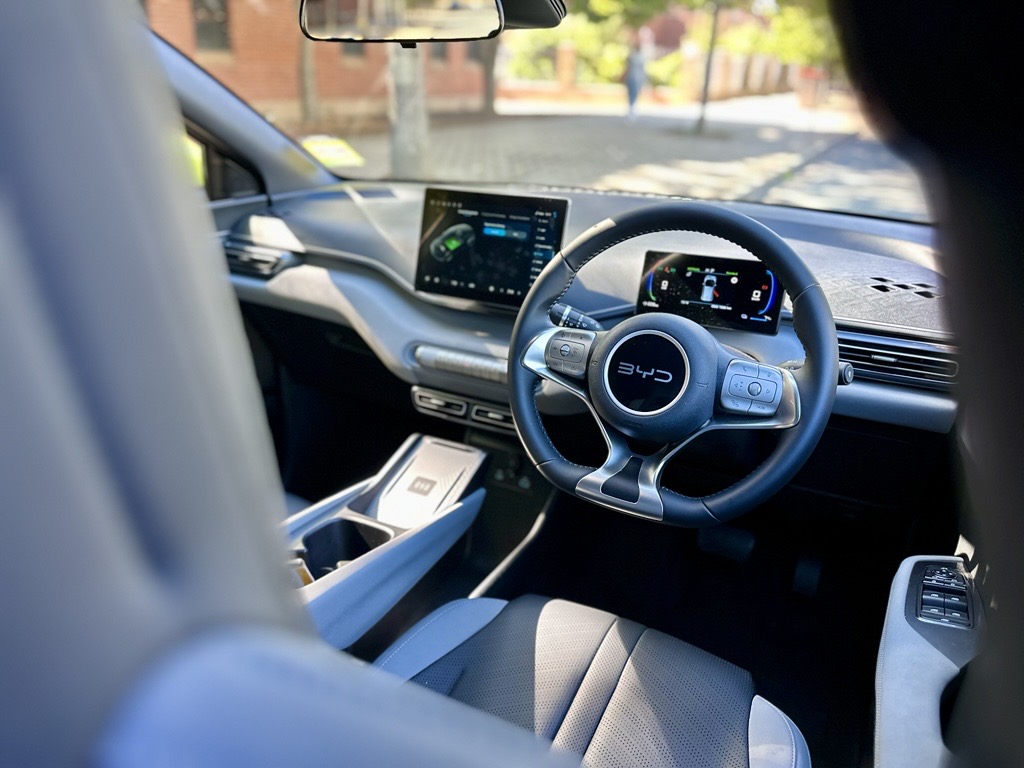
The BYD Atto 1 is the cheapest new car on sale in Australia.
First, the figures
BYD is officially Australia's second-best-selling car brand.
Of the 108,778 new vehicles delivered in September, Toyota is still way ahead at 17,682, but then comes BYD with 8191, up 61.1 per cent on last September.
They're followed by Ford (7592), Kia (5901), Mazda (5702), Tesla (5654), GWM (5212), Hyundai (5073), MG (4635) and Geely (4473).
That last one is particularly ridiculous – Geely's sales are up 870 per cent year-on-year. Although selling barely anything a year ago admittedly makes that percentage slightly easier to achieve.
And those aren't the only relatively new names suddenly shifting serious numbers. Chery sold 4205 cars in September, Omoda Jaecoo 2310 and Zeekr 2050.
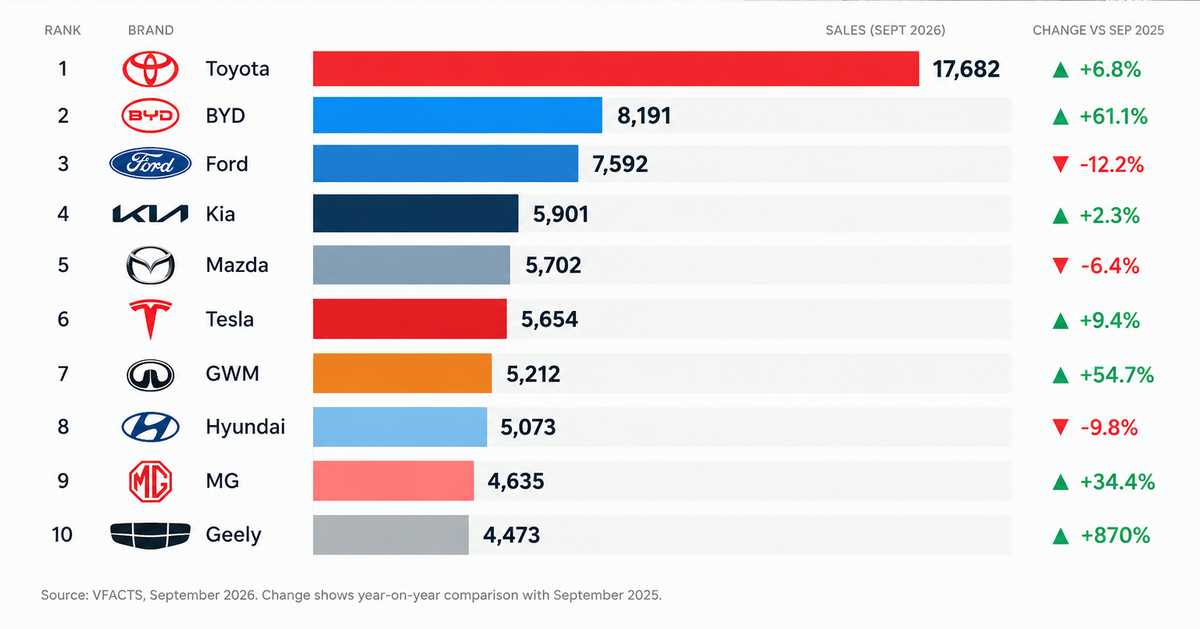
Australia's best-selling car brands for September 2026.
It's much the same story when you look at individual models.
Ford's Ranger remained Australia's favourite vehicle with 5062 sales, and the Toyota RAV4 wasn't far behind on 4624. Then came the Tesla Model Y with 4476 – beating the HiLux by 21 cars – followed by the BYD Sealion 7 on 2687.
Chery's Tiggo 4, GWM's Haval Jolion and the Geely EX5 also made the top 10. In fact, nine of Australia's 20 best-selling vehicles in September were built in China.
Add everything together and Chinese-built vehicles accounted for 35.5 per cent of VFACTS-reported sales in September, up 74.2 per cent compared with the same month last year. More than one in every three new cars sold.
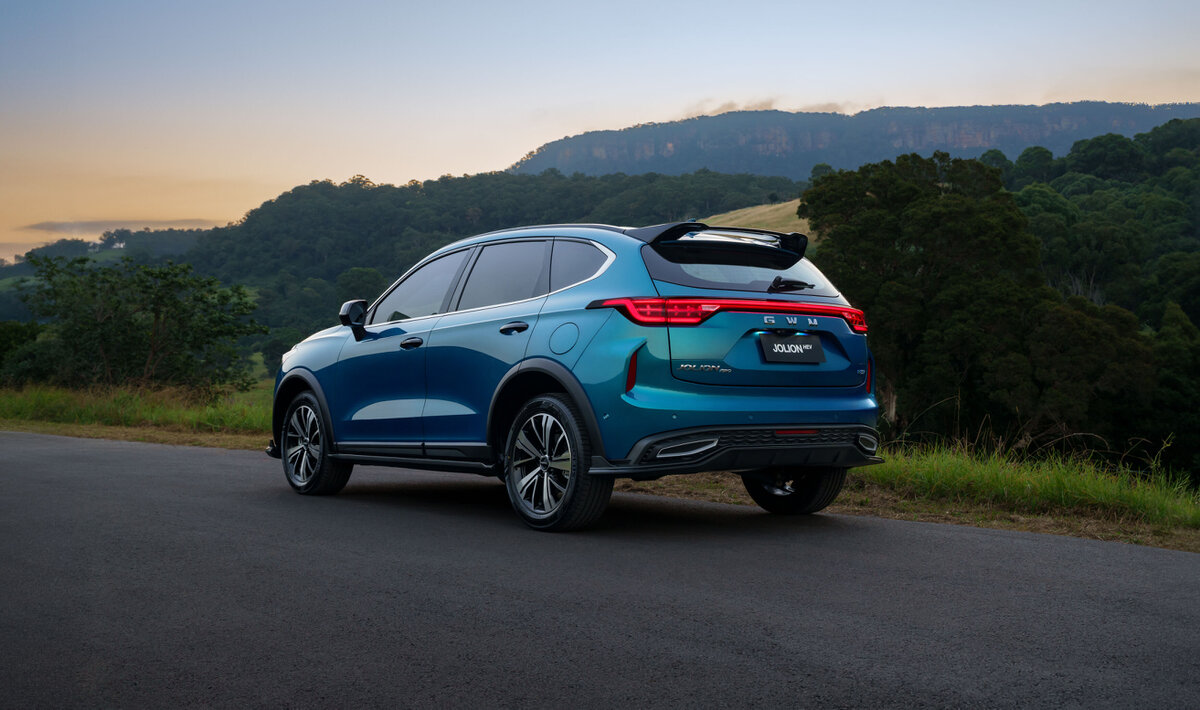
The GWM Haval Jolion. Photo: GWM Australia.
Meanwhile, some very familiar names are heading rather rapidly in the opposite direction. Mitsubishi sales were down 41.5 per cent year-on-year, Subaru 42.6 per cent, Volkswagen 36.9 per cent and Nissan 30 per cent.
And while Ranger and HiLux continue fighting over Australia's collective affection for a tray and enormous grille, 4x4 ute sales actually fell 13.1 per cent in September and are down 13.6 per cent so far this year. Even here, BYD is muscling in, selling 1492 Shark 6 plug-in hybrid utes last month.
Speaking of PHEVs, around 30 per cent of RAV4 sales since the new model arrived in June have been plug-in hybrids - a pretty impressive start for Toyota's first PHEV in Australia (we'll have a review of the new RAV4 PHEV XSE on the CARBIDS Blog next weekend).
What we know about Chinese used values so far
So what happens to all these BYDs, Geelys, Cherys and GWMs in three, five or 10 years?
We haven't auctioned enough of the newer Chinese cars to pretend we know the answer yet. But we've sold plenty of their predecessors.
Our best result for a Great Wall was $10,800, excluding buyer's premium, for a 2019 Steed dual-cab with 69,939km and a full logbook service history. Depending on drivetrain, a Steed dual-cab cost roughly $20,000–$26,000 new. We've sold older V200 utes and X240 SUVs too, all for less than $10,000.
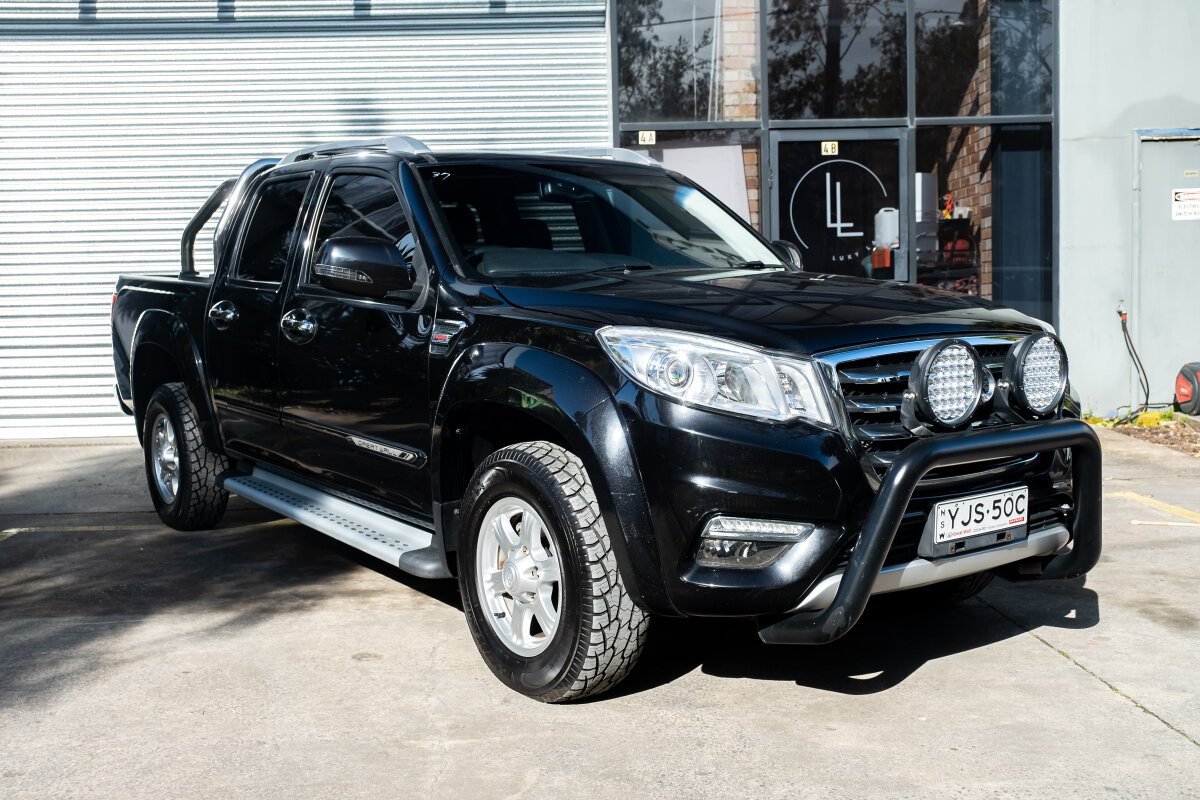
A Great Wall Steed we sold in 2024 from CARBIDS Sydney.
Then there's MG.
In April, we sold a 2024 MG ZST Essence with 26,606km, full service history and, reassuringly, a condition report stating it “runs and drives well”. Price? $17,138 before buyer's premium. It was $33,990 drive-away new. So in around two years, our auction result was almost exactly half its original price.
That doesn't necessarily mean your shiny new BYD will be worth 50 per cent less in two years. Today's Chinese brands are selling in vastly greater numbers, improving incredibly quickly and becoming far more familiar to Australian buyers.
But of the seemingly endless new badges arriving here every 30 seconds, which ones will used buyers actually want in 2030? We'll find out soon enough.
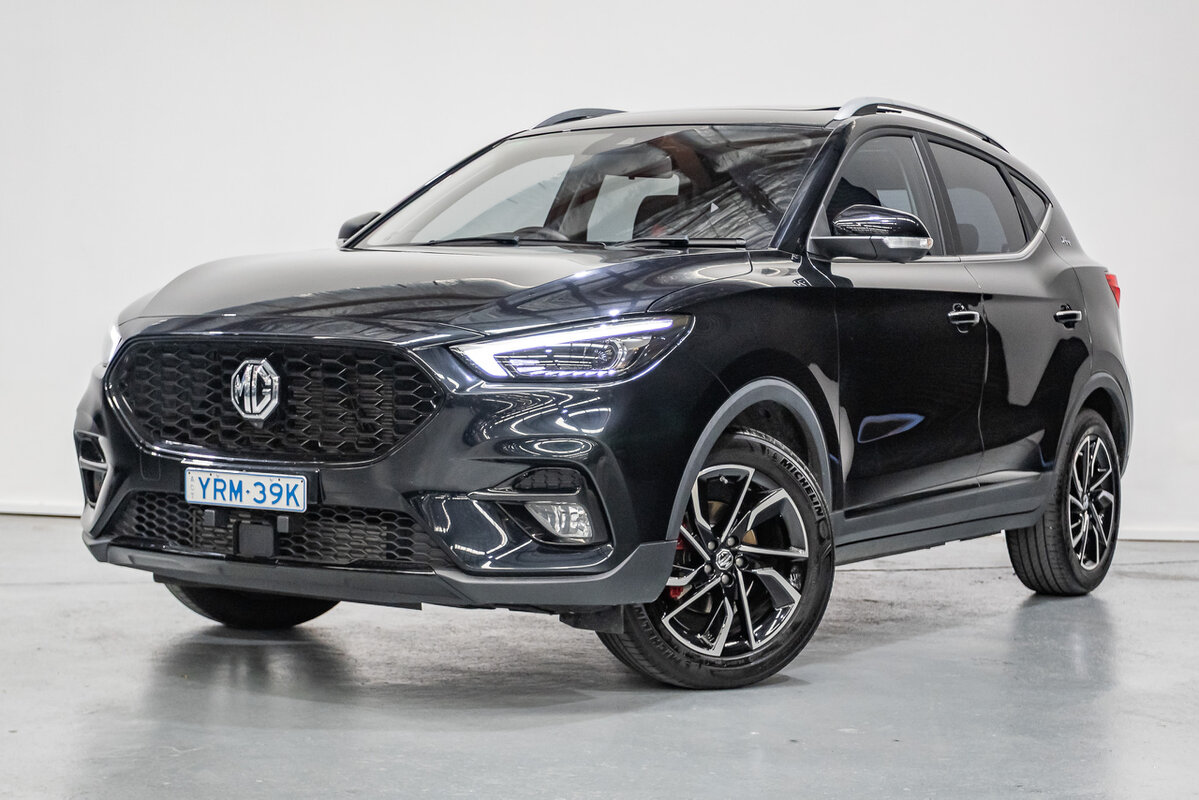
A 2024 MG ZST we sold earlier this year.
Have EVs turned a real corner?
The other big jump in September's figures came from EVs, which accounted for 24.2 per cent of Australian new-car sales, outselling petrol cars for the second month running.
And this isn't just Tesla doing Tesla things anymore.
The EV top 10 was led by the Model Y, followed by the BYD Sealion 7, Geely EX5, Zeekr 7X, Geely EX2, Tesla Model 3, BYD Atto 2, MG4 Urban, BYD Atto 1 and Kia EV3. Tesla aside, that's eight of the top 10 from China.
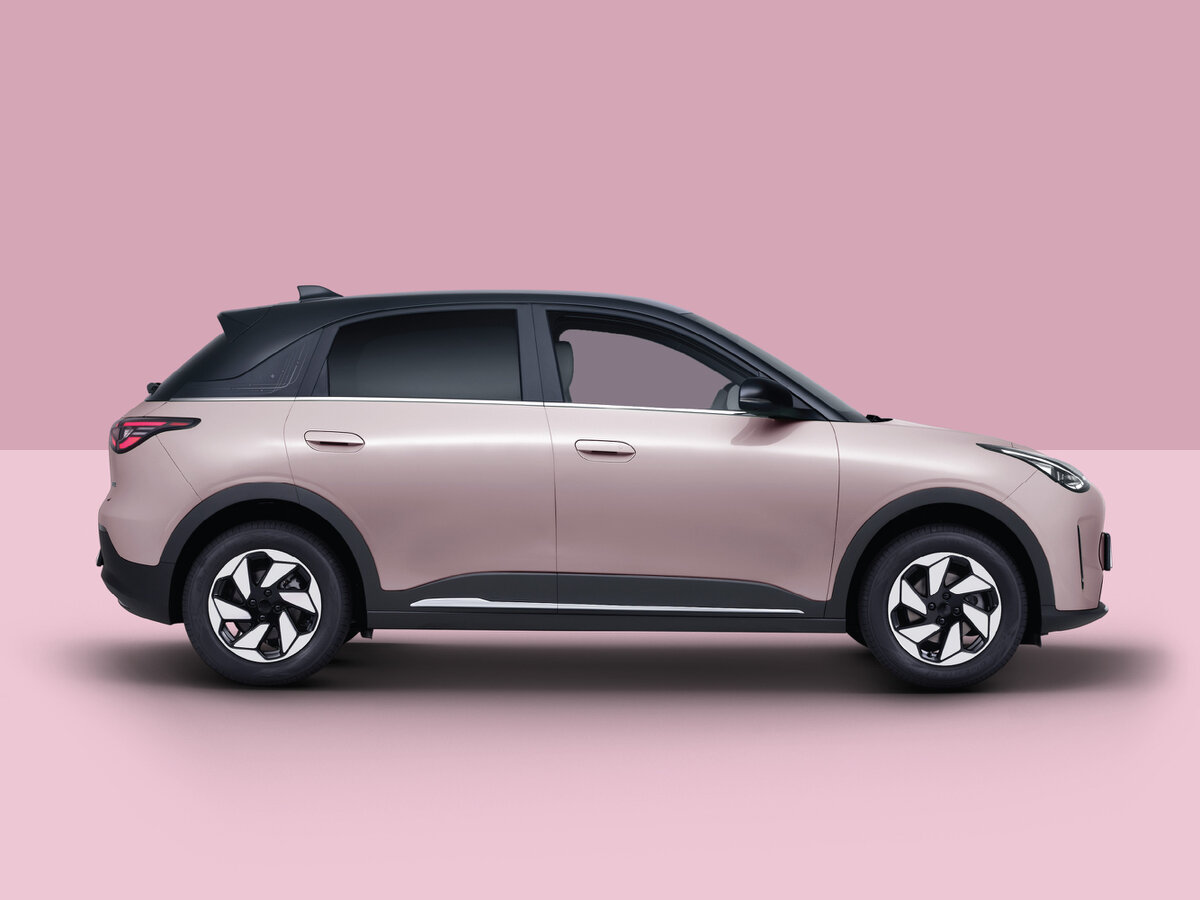
The Geely EX2 starts from $26,490.
Add hybrids and PHEVs and electrified vehicles accounted for almost half the market. Perhaps because, after years of promises, they're finally getting cheap. BYD is currently offering the electric Atto 1 Essential for $19,990 drive-away. A petrol Kia Picanto Sport manual is $22,290 drive-away.
We're seeing more of them at the other end too. CARBIDS now regularly auctions at least a couple of EVs each month, usually Teslas and Nissan Leafs.
Back in December 2022, our best result was $71,551 plus buyer's premium for a red 2021 Tesla Model 3 Long Range with just 16,377km showing. Its original list price was $73,400.
Two years later, we sold a 2015 Tesla Model S P85D for $50,251. That was a car worth around $178,500 drive-away in NSW when new.
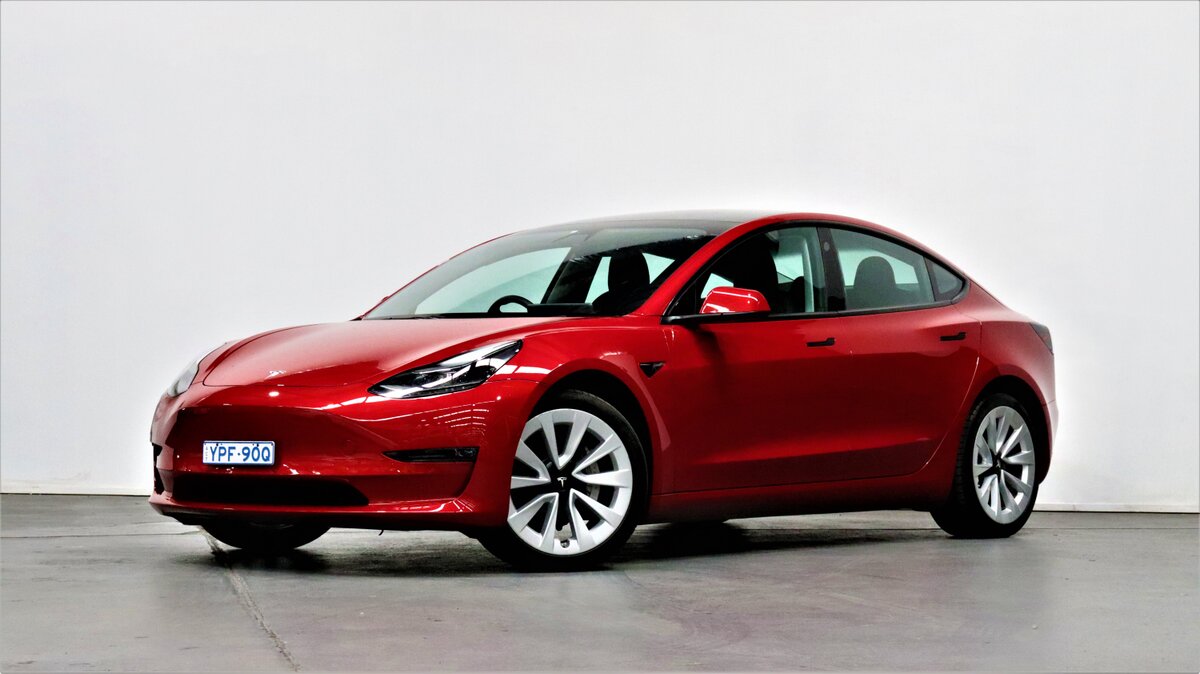
The highest closing price we've ever got a Tesla was $71,551 for this Model 3 back in 2022.
Then, in July this year, a 2023 Nissan Leaf with 10,215km and full service history sold for $22,050 plus buyer's premium. New? $50,990 before on-roads.
We've looked at EV depreciation in more detail previously, and it's not exactly gentle.
And much like the Chinese cars, EV technology will continue to improve and leave older models behind - meaning depreciation likely won't improve any time soon.
But it seems a lot more Australians are ready to buy them, even over the tried and trusted options.
Keep an eye on our lots here.
|
|